Wilson Sibbett memorial symposium
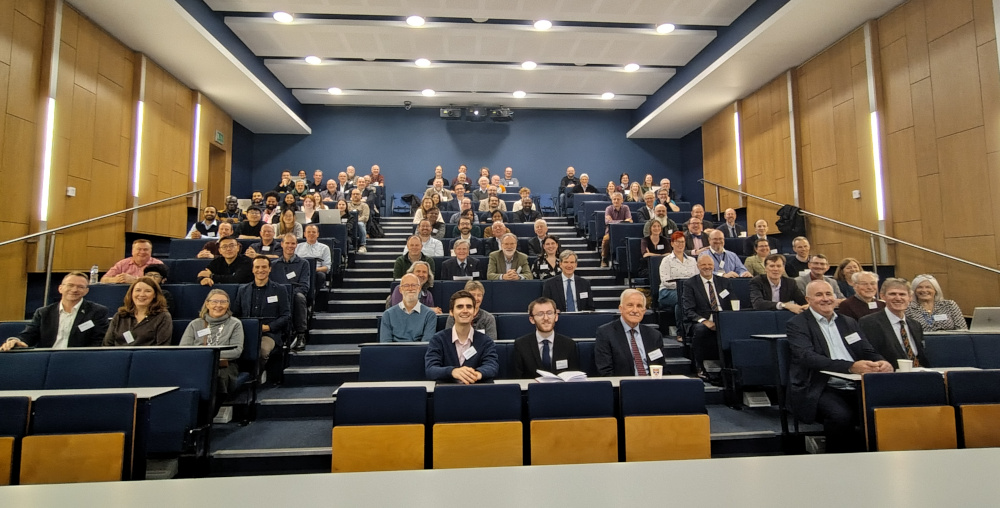 A memorial symposium was held on the 22 October 2025 celebrating the work of Professor Wilson Sibbett, who died in October last year.
Wilson was a highly respected member of the international optics and laser community, and worked for 30 years in the School of Physics and Astronomy.
Wilson was a pioneer of research on ultrashort pulse laser science and technology. His work spanned many areas in the generation, measurement, and application ultrafast spectroscopy. He was also a pioneer of interdisciplinary research at St Andrews, building strong links with Ninewells Hospital and leading to the development of biophotonics as a major research strength for the University.
Wilson joined St Andrews in 1985 from Imperial College London, and over the years he served as Chairman, Head of School, and Director of Research in Physics. Sibbett’s research vision, astute recruitment policy and drive resulted in St Andrews’ Physics Department becoming an internationally recognized centre of excellence. He was elected as a Fellow of the Royal Society in 1997, Wardlaw Chair of Natural Philosophy from 1997 to 2014 and held the post as Emeritus Professor on his retirement.
Wilson built his international reputation for laser technology at Imperial College, making leading contributions to the development of the streak camera, an instrument which captures the properties of a light pulse with 1 trillionth of a second time-resolution.
At St Andrews, Wilson and his team discovered a new way of generating ultra-short pulses of laser light, with the invention of the self-mode-locked titanium sapphire laser. This ground-breaking research transformed the technology used for the generation of femtosecond-duration light pulses. His discovery eventually provided the underpinning technology for several of the recent Nobel Prizes in physics and in chemistry.
In 2001, he was appointed to chair the Scottish Science Advisory Committee, making him Scotland’s first ever Chief Adviser on Science, by what was then the Scottish Executive.
Wednesday’s symposium brought together those involved in these different aspects of Prof. Sibbett's career to reflect on the impact his work has had and to give a forward-looking perspective to future scientific and technological developments.
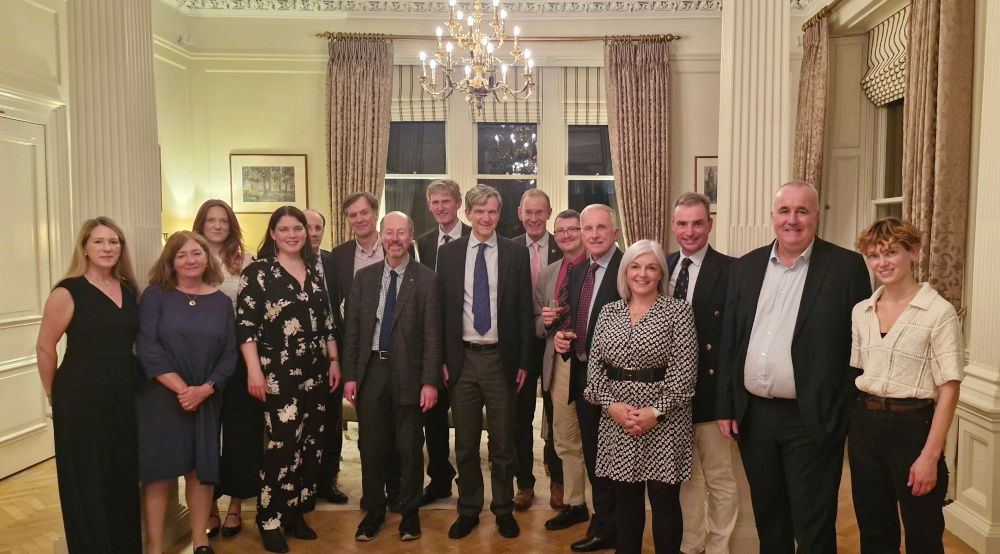
Professor Graham Turnbull who organised the event, said:
“We were delighted to welcome 100 old friends and colleagues to our memorial symposium in memory of Professor Wilson Sibbett FRS. Participants travelled from as far as France, Germany and the US to share their memories, and reflect on Wilson‘s incredible scientific legacy. Twelve internationally-renowned speakers shared their personal memories of Wilson, and how he had inspired and supported them during their careers. They each also presented their personal visions for the future of photonics research and innovation in their area of expertise. We were especially pleased to share the day with two of Wilson’s daughters, and to convey to them the high standing in which Wilson is held by the photonics community.”