Launching a new critical guide for education for sustainable development
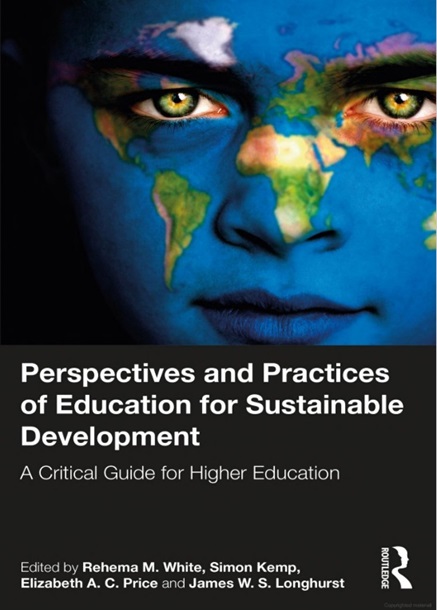
What is the purpose of higher education asks Dr Rehema White? At the very least, we hope that our graduates will do no harm to society and planet – we hope, indeed, that they may enhance the world in which we live. This means our teaching and learning need to inspire as well as inform, create debate and support critical insights as well as develop specific skills and knowledge. Our graduates can thus be vocationally prepared, contribute to society and enable a sustainability transformation. Education for sustainable development (ESD) facilitates this process, whilst aligning with other agendas, such as quality education, decolonising curriculum, diversity and inclusion and entrepreneurship. This brand new book was released this week to help drive and deepen ESD efforts in universities.
“This book is a powerful call to action” wrote Charlotte Bonner, EAUC, UK.
Ailsa Crum, QAA’s Director of Membership, Quality Enhancement & Standards reported that: “It successfully addresses a broad audience – scholarly in its approach but also provides practical tools and specific examples making it as valuable for theoretical consideration as for educators seeking to enhance their own practice.”
This key title offers a clear route to ESD, whilst questioning how we reconcile participatory, inclusive processes and the urgency of global crises. The critical volume was written by the expert group who led on the QAA/Advance HE Guidance on ESD in 2021 and is designed to catalyse conceptual debate and implementation. You can purchase a copy here. Watch out for a variety of launch events and webinars!
Routledge say that “This is essential reading for all those interested in beginning or widening ESD in programmes, universities and the wider sector, including academic staff, university senior managers and support staff, students, policy makers, employers, and community leaders.”
The book has also received excellent reviews from the field:
“It has become almost commonplace to say that education is needed if we are going to address the multiple ecological and social crises facing humanity. Yet too little thought is given to what form that education might take, what is needed for a deeper transformation, and indeed whether some forms may even be harmful for the cause. This book provides deep insights into this question in the context of higher education. Addressing multiple aspects of the question through its different chapters – on the meanings of sustainable development, curriculum design, assessment, research, leadership and many other areas – it brings together existing knowledge on the topic and provides fresh perspectives.”
Tristan McCowan, Professor of International Education at the Institute of Education, University College London, UK.