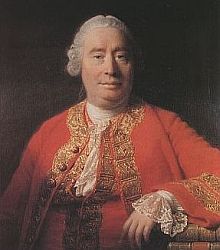
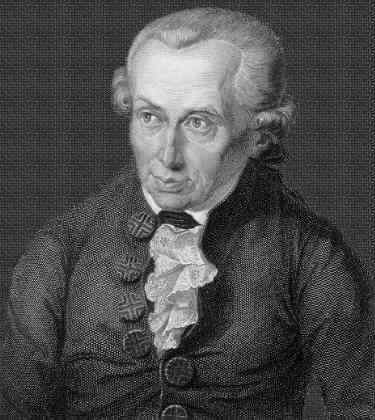
In Epistemology, there are three Great Dead Colleagues: DesCartes, Hume and Kant. In their various ways, and given their different temperaments, they offer the same diagnosis of our epistemic predicament in this area. Which encourages the thought that said diagnosis might be correct. To spot the thought in DesCartes requires a high degree of sophistication, for he seems on the surface to be saying just the opposite. So Hume and Kant are the men to study. Fortunately, they are in complete agreement on this matter. Indeed, Kant takes Hume to be his starting point. So read Hume. Kant's High-German style is difficult even in translation.
The Problem of Induction, as they call it nowadays, is THE central problem of Epistemology. For here is where you get Scepticism concerning Reason in its purest form. The classical locus is The Treatise:-
A Treatise of Human Nature, Book 1, Part III. There are many editions: try OUP 2000 or Clarendon 1978. Some tutors recommend only sections 6 & 11-14 for the study of induction, on the grounds that Hume is elsewhere in Book III discussing causation. But the plain truth is that Hume quite properly takes these two 'separate' tutorial topics as constituting ONE philosophical problem. So read the whole Book
And it will do no harm at all to see Hume arguing the same case slightly differently. Read Sections IV-VI of the First Enquiry. The full reference is: Enquiries Concerning Human Understanding and Concerning the Principles of Morals.(Again there are several editions: Clarendon 1975, or OUP 1998, revised 1999.
And remember, when reading Hume here or elsewhere, his interest in never in an ex post facto justification of our beliefs. That is an odd modern disease. His interest is always in explanation.
There is an unbelievable amount of literature available. No wonder there are no rainforests left. No wonder the Sahara is not the verdant paradise it wa in Hume's day. So you will have to be very selective. You are welcome as always, to consult the faculty reading list if you want textbooks. But here is my short list.
The Justification of Induction , OUP 1974. This is a volume in the Oxford Readings in Philosophy Series. Most of them are good. This one is poor. But at least it brings together some of the classical idiot tries at a solution to Hume's problem in the one volume. Use the editor's introduction to help you divide up the various tries (standardly into Analytic, Inductive and Pragmatic solutions. Then pick and choose, as we say, amongst the articles.
Choice and Chance: An Introduction to Inductive Logic, Dickenson, Belmont 1966. This delightful little book is long out of print, as good old books tend to be. (The publishing world prefers bad new books). But it has such a nice and simple-minded way of locating the standard tries, and showing you in pictures what is wrong with them, that it is well worth trying to dig it out from some library somewhere.
Reason and Prediction, CUP 1973. This is Blackburn's D.Phil. thesis in book form. And it reads like it too. Rather dry. But it is wonderfully accurate. Use it as a background Bible in the area. Especially good destruction: on Goodman and the alleged grue-green paradox, for instance. And check out the little-known try at a solution by the economist Roy Harrod. Which is very seductive until you see what is wrong with it. Ignore, for now Blackburn's own solution: it mixes together two chunks of philosophy which are best (for now) kept separate. Only return to it, if at all, after you have read Martin Hollis below.
The Problems of Philosophy, OUP 1912, reprinted 1967. Chapter 6 is Russell's bright and breezy introduction to the topic. And is most people's first introduction to the problem. Wicked waste! Read Hume first. Russell does not really understand. And anyone who tells me about Russell's bloody chicken in tutorials can expect a hard time.
...has recently retired. He still understands The Treatise better than anyone else in Oxford. And he has written the best short article I know on Hume and Scepticism concerning Reason. But it is very compressed, and therefore difficult. But read him if you want to understand Hume properly. The full reference is 'Doubts about the Concept of Reason', PASSV vol. 59 (1985), pp. 249-267. PASSV is the acronym for Proceedings of the Aristotelean Society Supplementary Volume.
'Reason and Reality', PAS vol. 68 (1968), pp. 271-286. You can work out for yourselves what PAS stands for. This is typical Hollis; bright and breeezy, and a joke on every other line. Which means he is not to everyone's taste. But if you like his style, you will find this article very helpful. It shows you just how deep the problem of induction cuts, being involved as it is with our basic conceptions of perception, matter, causation, identity, object.
Is one of the few brave souls who have tried out the so-called 'Analytic' solution. I forgive him, for he was a very young man in those days. But notice how persuasive it can sound in the hands of an elegant writer. Two sources. (1) 'On Justifying Induction', Philosophical Studies vol. 9 (1958), or chapter 9 of his little book Introduction to Logical Theory, Wiley: New York 1953
Is famous for his little book Fact, Fiction and Forecast (Athlone Press, 1954; Bobbs-Merrill 1973; Harvard UP 1983), which introduces the so-called grue/green paradox. You need to be very clear on what is good and what is bad with his ideas. Blackburn and Skyrms are quite good, though Blackburn is a little longwinded. But there is a nice little article available:-
'On the New Riddle of Induction', Philosophical Review vol. 69 (1960), pp. 511-22. Reprinted in the Oxford Readings Series volume The Philosophy of Science, edited by P.H. Nidditch. Which also contains a further interchange with Goodman.
I recommend that those approaching the subject for the first time ignore grue/green first time around, in order concentrate on that matter in a second essay. Finalists should concentrate on understanding Goodman. I can summarise Goodman's position for you in four lines:
[1] Here is the Old Riddle. Hume's problem.
[2] And here is my solution to it.
[3] Here is the New Riddle. Mine.
[4] And here is my solution to that.
And I suggest you read and think carefully, asking yourselves whether [1] Goodman has indeed correctly identified Hume's problem [2] Goodman has solved Hume's problem [3] Goodman indeed has found a new problem [4] and has a solution to it.
Essay 1: Is it irrational to believe that the sun will rise tomorrow?
Essay 2: What is the New Ridle of Induction? Is it new? Can it be solved?
-oOo-