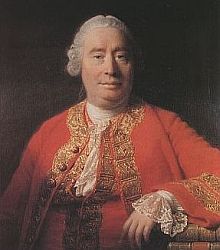
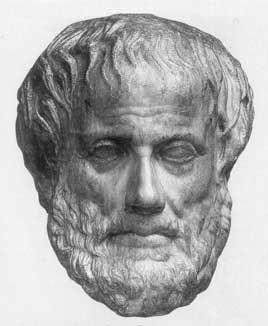
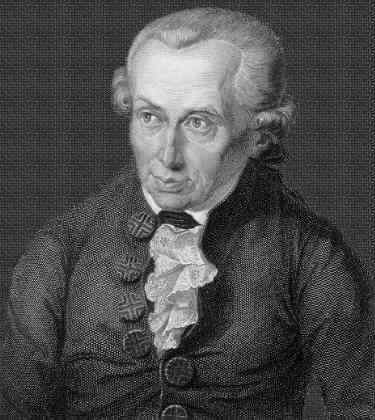
Above are pictures of the Big Three in Ethics. No-one else comes anywhere close. So it is part of every philosopher's education to read:
Hume: A Treatise of Human Nature Book III
Aristotle: Nicomachean Ethics
Kant: Groundwork of The Metaphysic of Morals
"What about Mill?", I hear you say? Forget it. There is nothing in Mill worth having that was not already in Hume, Aristotle and Kant. If you want to see utilitarian thought in its proper place, read Hume. If you want to see what is deeply wrong with classical Utilitarianism, read all three of them.
You can't make sense of this paper by just reading articles on one-off topics. It is very important to read whole books on Ethics to get a sense of how the land lies. Here are just a few. Read several of them all the way through.
Simon Blackburn: Ruling Passions, OUP 1998
Bernard Williams: Morality, Penguin 1973 or reprint
Bernard Williams: Ethics and the Limits of Philosophy, Fontana 1985
John Mackie: Ethics: Inventing Right and Wrong, Penguin 1977 or reprint
Gilbert Harman: The Nature of Morality, OUP 1977
Richard Hare: Moral Thinking, OUP 1981
Alasdair MacIntyre: After Virtue, Duckworth 1981
Herewith three tutorials in Ethics, each chosen with a particular end in view. The fourth is negotiable, and will depend on how things go in tutorials [1] - [3].
Here the main idea is to get you to see the difference between writing about the issues and actually engaging with them. But it should also fix some basic thoughts about the importance of consequences no matter what your overall view of Ethics.
The presenting problem of the last century, and the present one. This one is as deep as our philosophy goes. You need to form a view on it, one way or the other. Fortunately, we have available for study the best essay written on the topic in the Twentieth Century, Peter Strawson's masterpiece, Freedom and Resentment. Like it or hate it, you need to decide where you stand.
A deeply silly view, I take it, in all its manifestations. But very popular. Some of you will wish to disagree. Many academics do. But if you go that way, you need some fancy footwork to defend your view against a battery of very powerful arguments.
Sometimes we give you layman's books just to get you started in an area, and to generate a general awareness of the sweep and scope of the subject. One such is Jonathan Glover's delightful little book 'Causing Death and Saving Lives'. He has a chapter on the doctrine of acts and omissions, and also a chapter on the doctrine of double effect. And he takes a particular line in both. Read them.
But beware. This is not the level at which we study these things in the Academy. Nor is it the manner in which we study. Glover's chapters are far too brief (and therefore superficial), and they contain all kinds of straightforward errors, conflations and lacunae. They do not, as they cannot, approach these matters analytically from the ground up. To see how a philosopher argues in detail for substantially the same view, you need to read:
'Whatever the Consequences', Analysis vol. 26 (1966) pp.83-102. And then an expanded version of the same thoughts in The Tanner Lectures on Human Values for 1979-80. There are three lectures on Morality and Consequences. Read all three very carefully. They are downloadable in pdf format here. Bennett no doubt has in mind a famous article by Anscombe (reference below). I suggest you read it. And for further reading, chase up anything you like in Glover's chapter-by-chapter list.
'Modern Moral Philosophy' in Philosophy vol. 33 (1958), pp. 1-19.
And now see if you can put these ideas to work under a standard Oxford title. Select one of the following . But come along prepared to discuss (in just as much detail) the other.
Essay 1: Are you as responsible for a disaster you fail to avert as for one you actually cause?
Essay 2: Is it worse to intentionally bring about a death than to merely foresee it as an inevitable result of your actions?
There is no doubt about the article of the century in England. Freedom and Resentment by Peter Strawson. Not surprisingly it is reprinted all over the shop. Inded, you can even read it here. Again not surprisingly, it is a difficult (because rich in ideas) paper. Fortunately, there is an excellent commentary:-
'Accountability' in Zak van Straaten (ed.) Philosophical Subjects, Clarendon (Oxford) 1980. Which also contains Strawson's replies to the various contributors. It gives an excellent resume of the Free Will/ Determinism debate prior to Strawson's article. Follow up any references you like. Strawson's position on these matters is recognisably descended from Hume. So you should also read:-
An Enquiry Concerning Human Understanding, Section 8, entitled 'Of Liberty and Necessity'.
And to remind yourselves about the various positions that philosophers have staked out in this area, use the Oxford Readings in Philosophy volume:-
Free Will, OUP 1982. Which also reprints the Strawson article. Read the editor's introduction and anything else you like.
-oOo-