

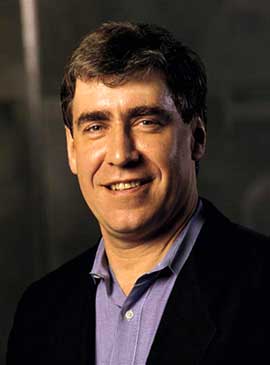
 Jeremy is an old friend of Balliol, and we were very pleased to see him back again in June to give us a talk which invited us to think afresh about the constellation of ideas that inform our sense of a liberal democracy. With the future of Iraq very much in mind, we began to wonder whether that ancient triptych, Rights, Democracy and The Rule of Law has deep constitutive links between its elements, or whether they are perhaps just a constellation, a set of separate ideas that have ended up in one and the same picture only through accidents of our intellectual history.
Jeremy is a native of New Zealand, that country in the world which most closely approximates the ideal of said liberal democracy. He trained in both Philosophy and Law at The University of Otago before coming to Oxford to complete a star doctorate on private property.
Since then he has had a glittering and truly international academic career. He has worked and taught at
universities across the globe: Oxford, Edinburgh, Berkeley, Princeton. And he regularly returns to New Zealand to teach at Otago and the University of Auckland.
Jeremy is currently Maurice and Hilda Friedman Professor of Law and Director of the Center for Law and Philosophy at Columbia University in the middle of Harlem.
He was elected a fellow of the American Academy of Arts and Sciences in 1998.
Jeremy works in the area of overlap between jurisprudence,
the theory of politics and moral and political philosophy.
His main concern is theoretical: to articulate and defend a liberal
account of human rights. But he also pursues the practical consequences
- there are many articles in his sprawling opus which tackle particular
areas of economic and social justice: the plight of the homeless,
our picture of welfare and charity, toleration in a multicultural society. And so on.
He is the author of several star books. Let me mention two recent ones which would well repay your time. The Dignity of Legislation (Cambridge, 1999) and Law and Disagreement (Oxford, 1999) represent the first real step beyond Rawls in political philosophy.
The circumstances of justice, they cry, are all very well.
But what actually determine outcomes in our societies are the circumstances of politics.
And it is about time that philosophers bent their minds in that direction. I agree.