Alba

Eukaryotic DNA is packaged into nucleosomes which regulate the accessibility of the genome to replication, transcription and repair factors. Chromatin accessibility is controlled by histone modifications including acetylation and methylation. Archaea possess eukaryotic-like machineries for DNA replication, transcription and information processing. The conserved archaeal DNA binding protein Alba (formerly Sso10b) interacts with the silencing protein Sir2, which regulates Alba’s DNA binding affinity by deacetylation of a lysine residue. This is a collaboration with Professor Malcolm White at St Andrews.
The PDB code links will take you to the PDB entry with links to the publication
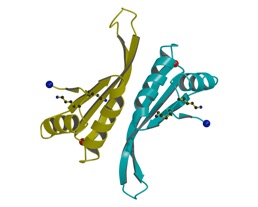

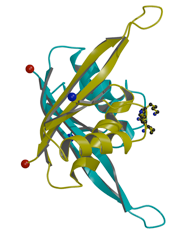

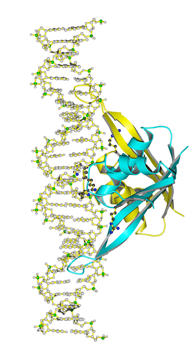
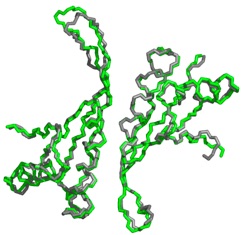
Many archaeal genomes contain a second hypothetical copy of the Alba gene (Alba2), and we have shown that in Sulfolobus solfataricus Alba2 is expressed at ~5% of the level of Alba1. We have demonstrated by NMR, ITC and crystallography that Alba2 exists exclusively as a heterodimer with Alba1 at physiological concentrations and that heterodimerisation exerts a clear effect upon the DNA packaging observed using electron microscopy. This suggests the role of Alba2 may be to influence higher order chromatin structure and DNA condensation.