
Using single unit neurophysiological data.
Measures of brain activity can be made using a wide range of techiques. No single technique is sufficient on its own to elucidate the relationship between brain activity and the mind. My method of choice is to examine what the individual processing units of the brain do by recording from single processing units (neurones) of the brain. This technique allows the actiivty of single units to be monitored with fine temporal precision. It is only with this fine spatial and fine temporal resolution that we can directly assess the "language" or "currency" of communication within the brain that underlies our experiences. Note: the University of St Andrews no longer supports primate neurophysiology.
The data obtained from the neurophysiological recordings are used to constrain and develope theoretical, computational and neural network models about the relationship between the brain's activity and the mind. These are then tested empirically using experimental psychological techniques.
Using experimental psychology.
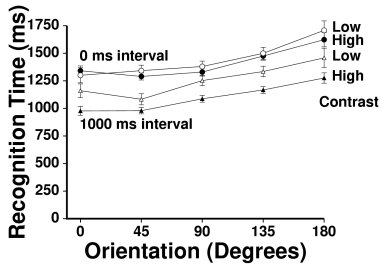
It is always of help to know the result - in terms of behaviour - of brain activity. We cannot simply note "this is what the brain does": this explains little about the mind. Psychology describes and explains what the mind (brain) achieves. Data from experimental psychology can and should be used to guide the types of question that are asked and to test the validity of ideas about how brain activity underlies or creates the mind.
To generate specific hypotheses, I use a combination of simulation, computational and neural network based approaches based on neurophysiological data. This combination of modelling work allows specific tests to be performed regarding a range of psychological processes ranging from perception to"central/executive" processes and memory formation.
Using simulations and computational models.
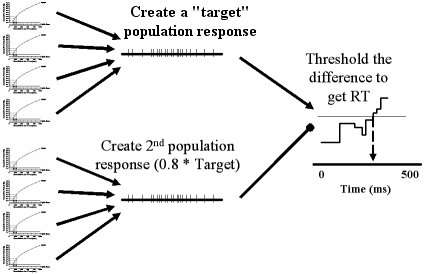
There is nothing quite as complex as the workings of the mind. This is great news for us - it what allows us to do the myriad of tasks we can do - but bad news if we want to know how it does things. Computational approaches allow ideas about interactions and relationships between different "components" of the mind to be assessed.
As with neural networks, the power of simulations and computational models is also their weakness: such models typically have a large number of degrees of freedom, making it possible (and perhaps likely) that such models will "fit" experimental data without reflecting the actual processes occuring in the brain. The integration of neurophsiological data into such models provides a powerful technique to constrain the possible outcomes of computational models.
Using neural networks.
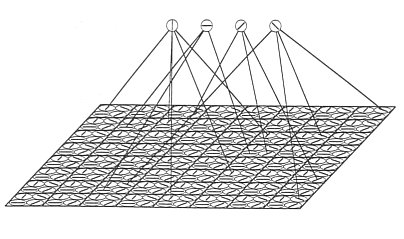
A central theme in my research is to investigate the computations or processes carried out by the brain. These processes depend critically on the nature of representations within the brain. The neural network modelling, aimed at providing explanations of the neurophysiological data, is fed back into the psycholoigcal experiments to allow direct testing of predictions. I use neural network approaches to help understand how particular representations might be formed and possible implications of those representations.
As with simulations and computational models, the power of neural networks is also their weakness: such models typically have a large number of degrees of freedom, making it possible (and perhaps likely) that such models will "fit" experimental data without reflecting the actual processes occuring in the brain. The use of neurophsiological data (i.e. properties of real neurones) into such models provides powerful constraints on the parameters, thereby reducing this problem.